Knife Sets vs. Buying Knives One by One
That 14-piece block holds three knives you'll use and eleven you won't. We compare the convenience of a set against building a small lineup around one great chef's knife.
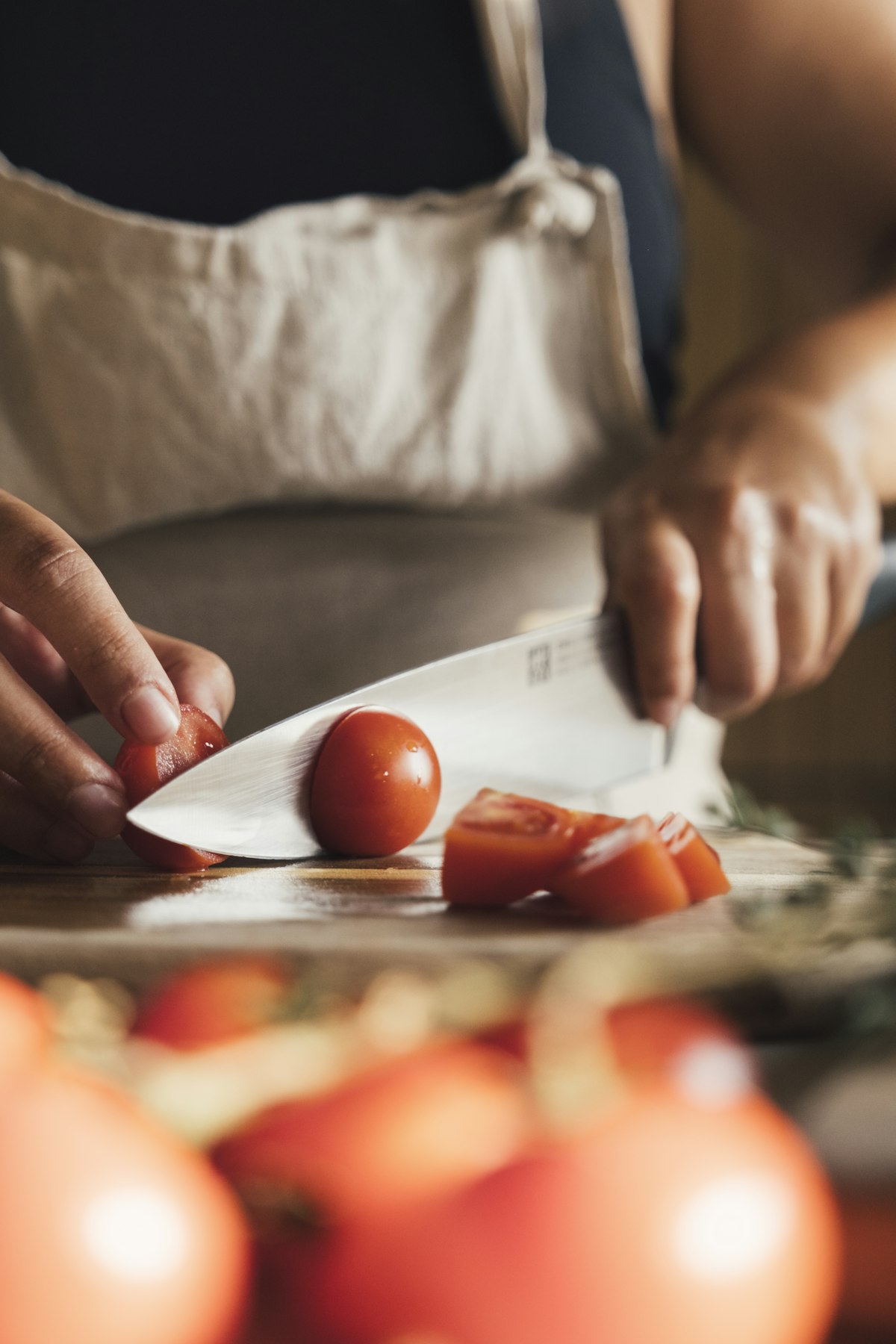
Open a typical wedding-registry knife block and you will find fourteen pieces, of which most households use three: the chef's knife, the paring knife, and whichever one is clean. The rest — the boning knife, the two extra steak-knife sets, the mysterious mid-size blade nobody can name — exist mostly to fill slots.
Meanwhile, a cook who buys knives one at a time ends up with exactly the blades their hands and habits need, usually spending less for better steel. But sets have real advantages too: one purchase, matched handles, a block that keeps edges safe. The honest answer depends on where you are starting from.
This guide weighs published specifications and long-term owner feedback, because knife marketing leans heavily on blade counts and steel names that do not tell you how a knife behaves at 6pm on a Tuesday.
The short version
- Buy a set if you are starting from zero, cook simple meals, and want one decision that covers the basics — but choose a small set from a reputable maker over a huge one from a stranger.
- Buy one by one if you already own a decent chef's knife or cook seriously several times a week. Put most of your budget into the one knife you use 90% of the time.
- The three knives that cover nearly everything: an 8-inch chef's knife (or 7-inch santoku), a 3.5-inch paring knife, and a serrated bread knife.
- Either way, budget for a honing steel or sharpener and a safe storage solution. A dull great knife is worse than a sharp ordinary one.
What to look for
- Steel type, in plain terms. German-style steels (like X50CrMoV15) are tougher and more forgiving of rough use; Japanese-style steels (like VG-10 or AUS-10) are harder, take a keener edge, and chip more easily if twisted on bone or frozen food.
- Full tang and balance. On a chef's knife, a full tang (steel running the length of the handle) adds durability and a balanced, planted feel. Lightweight stamped knives can still be excellent for paring and utility work.
- Handle comfort above looks. Grips swell, shrink, and rotate differently when wet. Reviews from owners with similar hand sizes to yours are worth more than studio photos.
- The piece count trick. Sets often count the block, the shears, and the honing steel as "pieces," and sometimes each steak knife. Compare blade counts, not box counts.
- Edge care plan. Most Western knives want a 15–20° edge. If you will not sharpen at home, choose a maker whose knives respond well to pull-through sharpeners or a local sharpening service.
Classic 7-Piece Knife Block Set
The set route done properly: forged German blades covering the core trio plus shears and a honing steel, from a maker with two centuries in Solingen.
- Forged from a single piece of high-carbon stainless steel (X50CrMoV15)
- Includes chef's, utility, paring, and bread knives
- Full tang with triple-riveted handles
- + One purchase covers the essentials with matched quality
- + Tough, forgiving steel suits busy households
- + Strong long-term owner satisfaction
- – Costs more than budget sets — by design
- – Block takes real counter space
Fibrox Pro Chef's Knife 8 Inch
The budget chef's knife that commercial kitchens buy by the dozen: light, grippy when wet, and sharpens easily — proof the one-by-one route need not be expensive.
- High-carbon stainless steel blade
- Textured Fibrox handle stays grippy with wet hands
- Conically ground edge for low cutting friction
- + Outstanding performance for its class
- + Lightweight — easy on wrists over long prep
- + Forgiving steel that sharpens quickly
- – Utilitarian looks
- – Lighter feel won't suit cooks who like heft
DP Gyuto 210mm
The classic entry into Japanese cutlery: a VG-10 core steel blade that takes a noticeably keener edge than Western knives at this level.
- VG-10 cobalt alloy steel core with stainless cladding
- Thin blade geometry for precise vegetable work
- Reinforced laminated wood handle
- + Razor-keen edge for fine slicing
- + Excellent value among Japanese knives
- + Light and nimble in hand
- – Harder steel chips if twisted on bone or frozen food
- – Rewards careful technique and hand washing
The math nobody prints on the box
A big set spreads its price across many blades, so the chef's knife inside it is necessarily built to a lower budget than a standalone knife at the same total price. That is the core trade: breadth versus depth. For a first apartment or a wedding gift, breadth wins — everything matches, everything has a slot, dinner gets cooked.
But once you cook regularly, your hand votes. Owners consistently report reaching for one favorite knife for the overwhelming majority of tasks. Doubling the quality of that one knife changes every meal; adding a seventh mediocre blade changes nothing. This is why experienced cooks tend to assemble a small, mismatched lineup over time: a chef's knife they love, a workhorse paring knife, a bread knife, and specialty blades only when a real habit (breaking down chickens, slicing raw fish) actually appears.
Buy for the cooking you did last month, not the cooking you imagine doing someday. The someday knife can be next year's purchase.
Building a lineup one by one, in order
If you go the individual route, this sequence covers the most ground per dollar:
- Chef's knife or santoku first. This is the budget priority — it will cut almost everything you cook.
- Paring knife second. For fruit, garnishes, deveining, and all the in-hand work a big blade does clumsily.
- Serrated bread knife third. Also the tomato, citrus, and crusty-roast knife. Cheap ones are surprisingly fine because serrations do the work.
- Only then, specialties. A flexible boning knife if you break down poultry weekly; a nakiri if vegetables dominate your cooking; a long slicer if roasts are a Sunday ritual.
Storage deserves a sentence of its own: a magnetic wall strip or an in-drawer tray keeps edges intact far better than a loose drawer, and takes less counter than a block. If counter space is your scarcest resource, our guide to small kitchen appliances that earn their counter space helps you audit what deserves to sit next to it.
Common mistakes to avoid
- Judging a knife by its weight in the store photo. You cannot. Prioritize maker reputation and return policies.
- Running good knives through the dishwasher. Heat, detergent, and rattling destroy edges and handles. Hand wash, dry, done — it takes twenty seconds.
- Buying a set for the steak knives. Decent steak knives are cheap separately; do not let them justify a mediocre core set.
- Skipping the sharpener. Any knife in this guide dulls. A simple two-stage sharpener or a yearly professional sharpening keeps your investment honest.
For the board all these knives work on, see cutting boards compared — board material affects edge life more than most people realize.
FAQ
How many knives do I actually need?
For most households, three: a chef's knife, a paring knife, and a serrated bread knife handle well over 95% of kitchen tasks. Everything else is a genuine convenience for a specific habit, not a necessity.
Is German or Japanese steel better?
Neither — they are different compromises. German-style steel is tougher and more forgiving; Japanese-style steel is harder, sharper-feeling, and less tolerant of abuse. Match the steel to your habits and sharpening willingness.
What about knife sets from big-box stores?
Some are perfectly serviceable, especially from established cutlery brands. The warning sign is a very high piece count at a very low price — that math only works with thin, soft steel. Fewer pieces from a named maker is the safer bet.
How often should knives be sharpened?
Hone lightly every few uses to realign the edge, and truly sharpen when honing stops helping — for home cooks, typically every few months. If a tomato skin resists and the knife slides instead of biting, it is sharpening time.