Choosing a Dinnerware Set You'll Still Like in Five Years
Eleven minutes in a store aisle decides what you eat off for a decade. Materials, weight, and the open-stock test that makes a broken plate an errand, not a crisis.
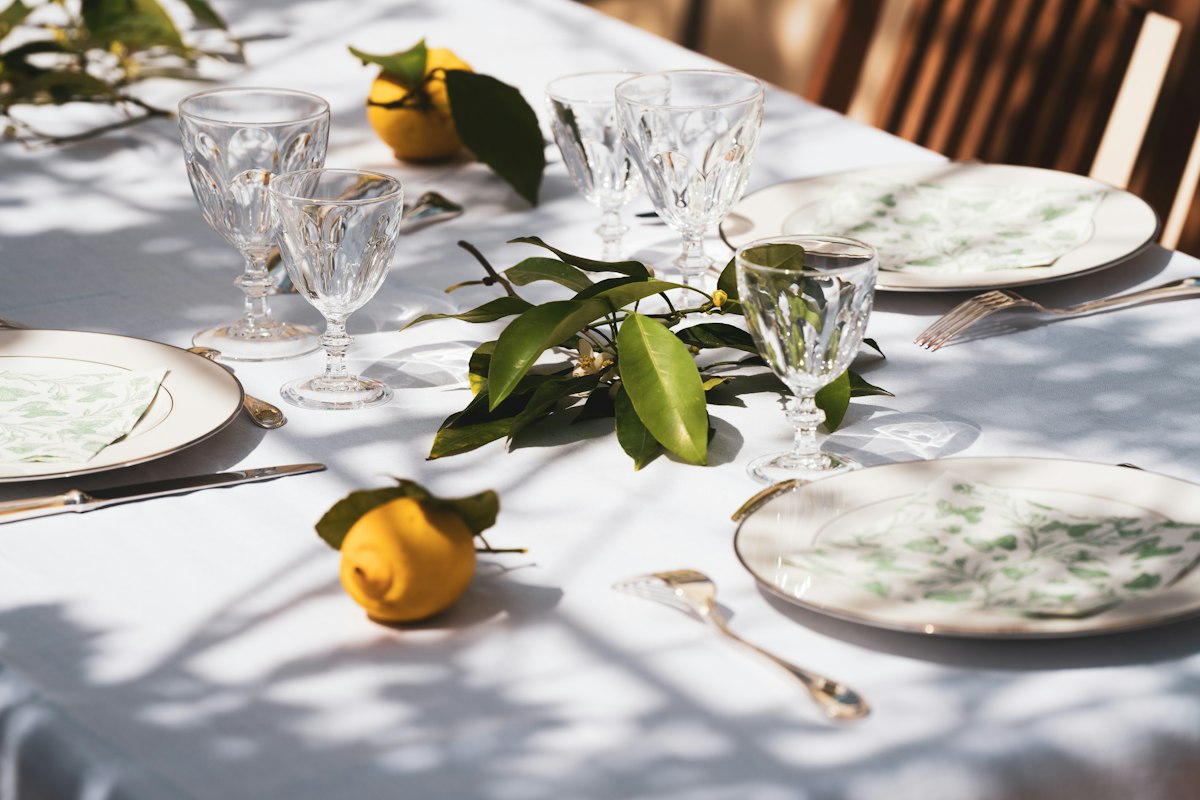
Dinnerware is a strange purchase: you use it three times a day, every day, for years — and most people choose it in about eleven minutes, standing in a store aisle, holding a plate up to fluorescent light. Five years later the pattern feels dated, two bowls are chipped, the replacement pattern has been discontinued, and every meal is served on a quiet reminder of a rushed decision.
Choosing well is not about taste alone. Material, weight, sizing, and how a maker supports a pattern over time matter as much as how the glaze looks today.
Here is a framework built on published specifications and long-term owner experience, so the set you buy now is the set you are still happy to set a table with in five years.
The short version
- Porcelain and bone china are the durability sweet spot for daily use: strong, non-porous, and lighter than they look. Modern versions are usually dishwasher- and microwave-safe.
- Stoneware brings the cozy, handmade look and satisfying heft, but chips more readily and varies more between pieces.
- Buy an open-stock pattern (pieces sold individually, from a maker with a long-running line) so a broken plate in year three is an errand, not a crisis.
- A 16-piece set (service for four) is a starting point, not a destiny. Most households live on dinner plates, salad plates, and two bowl shapes — buy depth where you actually eat.
What to look for
- Material honesty. "China" on a box can mean porcelain, stoneware, or melamine-adjacent marketing. Check the actual material in the specifications.
- Chip resistance in the real world. Rolled or reinforced rims, fully vitrified bodies (for porcelain/stoneware), and foot rings that do not trap water all predict a longer life.
- Fired-in versus surface decoration. Patterns under the glaze last the set's lifetime. Metallic bands and raised surface decals often exclude the microwave or fade in dishwashers — read the care statement before falling for gold rims.
- Stacking and storage reality. Measure your cabinet shelf height and depth against the dinner plate diameter (10.5–11 inches is typical). Wide rims look elegant and store terribly.
- Weight per piece. Heft feels luxurious for the first course and tiring by the dishwasher unload. Owner feedback is full of beautiful sets abandoned for being too heavy.
- Replacement support. Long-running patterns from established makers (some lines have sold for decades) are the closest thing to insurance dinnerware offers.
Winter Frost White Dinnerware Set
The famously hard-to-kill glass dinnerware: feather-light, space-saving stacks, and a plain white pattern that has stayed in production for decades.
- Vitrelle triple-layer glass construction
- Chip- and break-resistant per the maker
- Microwave and dishwasher safe
- + Stacks in half the space of ceramic
- + Replacement pieces easy to find — the pattern is a long-runner
- + Light enough for kids and arthritic hands alike
- – Minimal, cafeteria-adjacent aesthetic
- – Can shatter dramatically if it ever does break
Stoneware Dinnerware Set
Dense stoneware with a durable glaze in the brand's signature colors — the rustic-elegant route, backed by a maker whose tableware lines run for years.
- Dense stoneware with scratch-resistant enamel glaze
- Service for four in standard 16-piece configuration
- Dishwasher, microwave, and oven safe to maker's stated limits
- + Beautiful, saturated color that resists fading
- + Substantial, restaurant-quality feel
- + Strong glaze resists utensil marks well
- – Heavier than porcelain per piece
- – Stoneware chips more readily than porcelain if knocked
Eternal Bone China Dinnerware Set
A classic American bone china pattern in production for decades — translucent, remarkably chip-resistant, and proof that 'fancy' can be the practical choice.
- Genuine bone china body
- Accented rim detailing per pattern specification
- Open-stock pattern with long production history
- + Among the strongest dinnerware materials made
- + Replacements obtainable years later
- + Light in hand despite its formal look
- – Premium pricing per place setting
- – Metallic-accent versions need care-note checking for microwave use
The materials, without the marketing fog
Bone china sounds fragile and is anything but: the bone-ash body fires into one of the strongest, most chip-resistant ceramics made, with a translucent warmth no other material matches. It is typically the priciest option, and the best of it comes from heritage makers whose patterns stay in production for decades.
Porcelain is bone china's practical sibling — nearly as strong, non-porous so it resists stains and odors, and usually the best value for daily family use. If a household needs one recommendation, it is usually quality porcelain.
Stoneware is fired lower, stays slightly porous in cheaper versions, and delivers the rustic, speckled, restaurant-farmhouse look. It is heavier, warmer to the eye, and chips more willingly. Buy it for the aesthetic with eyes open, and expect to replace pieces more often — which makes open-stock availability doubly important.
Earthenware is the most delicate of the family and is best reserved for display and occasional use. Melamine deserves an honest footnote: it is nearly unbreakable and great for patios and kids, but it is not microwave-safe and should not serve very hot food — treat it as a specialty set, not the main one.
How many pieces do you actually need?
Sets are sold in rigid formulas, but households are not. A realistic daily rotation for a family of four is: dinner plates ×6–8 (so the dishwasher cycle is not an emergency), salad/dessert plates ×6, and bowls in the two shapes you truly use — usually a wide soup/cereal bowl and one deeper bowl for noodles and grain bowls. Mugs earn their place; matching saucers, for most modern households, do not.
The best dinnerware decision is boring on purpose: a simple, well-made pattern you can replace piece by piece for a decade beats a dramatic one you must replace entirely in three years.
If table setting is part of a broader kitchen refresh, the same longevity logic drives our guides to cast iron vs. nonstick skillets and cutting boards compared — buy the thing that lasts, once.
Caring for a set so it reaches year five
Most "dishwasher damage" is really loading damage: plates rattling against each other. Leave a finger's gap between pieces, keep metal utensils out of the plate rack, and skip the heated-dry cycle for decorated pieces. Gray marks on light porcelain are usually metal transfer from flatware, not glaze failure — a paste of baking soda removes them. Stack with felt or cloth protectors if plates are heavy, and rotate the stack so the same two plates are not doing all the work.
FAQ
Is bone china too fancy for everyday use?
No — it is one of the most practical everyday materials precisely because it is strong and chip-resistant. Its reputation for fragility is a century out of date; most modern bone china is dishwasher- and microwave-safe, though makers' care notes always win.
How can I tell if a pattern will still be sold in five years?
Look for open-stock sales (individual pieces available), a maker with a long track record in dinnerware, and a pattern that has already been in the line for several years. Brand-new celebrity patterns are the riskiest.
Stoneware or porcelain for a busy family?
Porcelain, in most cases: it is stronger per ounce, resists staining, and survives dishwasher life with less chipping. Choose stoneware when the look truly matters to you and the pattern is open stock.
What about buying vintage or secondhand sets?
It can be a wonderful value for heritage patterns, with two cautions: confirm the pattern is lead-safe for food use if it predates modern standards (particularly very old or brightly decorated pieces), and accept that replacements are a treasure hunt rather than a reorder.