Cutting Boards Compared: Wood, Plastic, and Composite for Daily Cooking
Your board is quietly sharpening or dulling every knife you own. Wood, plastic, and composite compared on knife care, hygiene, and the maintenance each really demands.
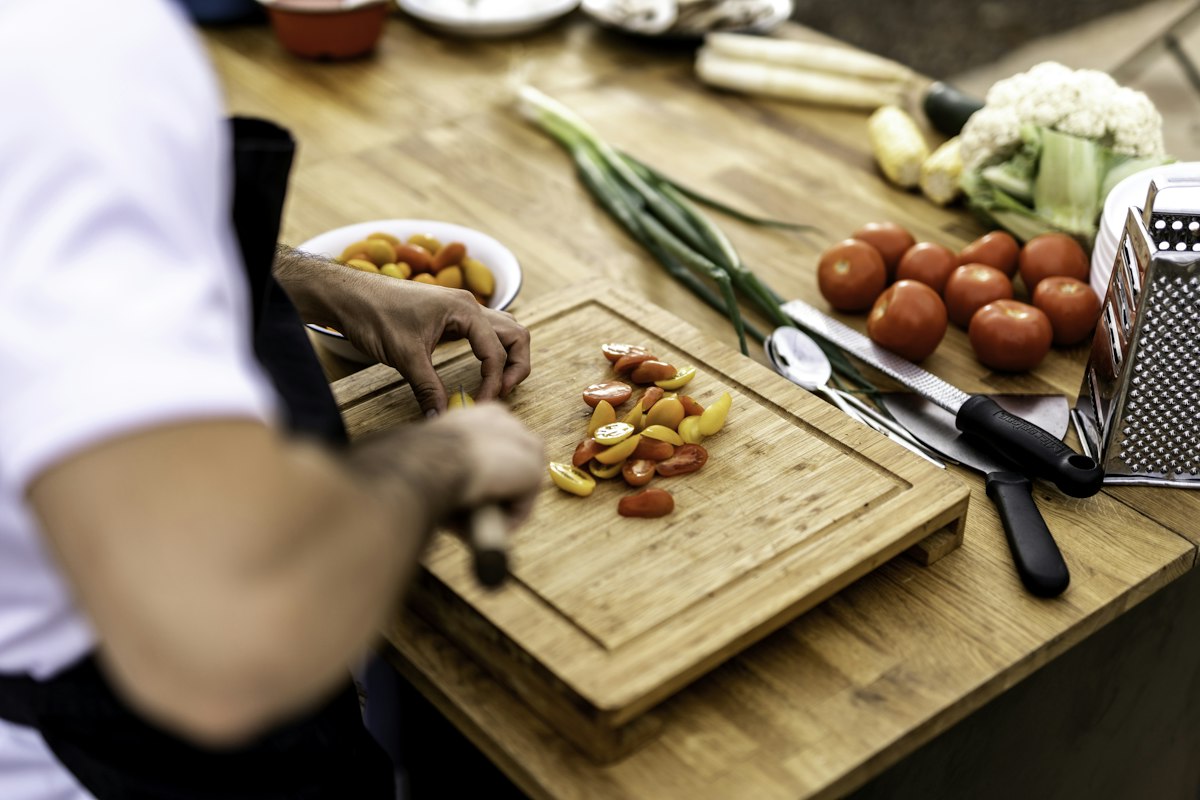
A cutting board is the most-used surface in your kitchen and the one most people buy on autopilot — whatever is cheap, in the right color, at the front of the store shelf. Then a year later the plastic board is scarred and stained, or the handsome wood board has split down the middle, and dinner prep happens on a surface nobody trusts.
The three main materials — wood, plastic, and composite — each have a legitimate case. They differ in how they treat your knives, how they handle hygiene, and how much maintenance they demand on a Sunday afternoon.
This comparison is based on published material specifications, food-safety guidance, and long-term owner feedback, so you can match a board to the cooking you actually do.
The short version
- End-grain or edge-grain wood is kindest to knife edges and can last a decade or more with occasional oiling. Best for cooks who hand-wash and cook daily.
- Plastic (polyethylene) is light, cheap, and dishwasher-safe — the practical choice for raw meat and for households that will not hand-wash anything.
- Composite (wood-fiber/resin) splits the difference: thin, light, dishwasher-tolerant, and far more durable than plain plastic, at a higher price.
- Whatever you choose, own at least two boards and replace or resurface any board with deep grooves that a sponge cannot clean.
What to look for
- Size first. A board around 12 × 18 inches handles a whole chicken or a pile of onions without food migrating to the counter. Smaller boards are fine for fruit and cheese; tiny boards are how kitchens get messy.
- Weight and stability. A board that skates across the counter is a safety issue. Look for rubber feet, a juice groove that does not eat the whole surface, or enough heft to stay planted. A damp towel underneath fixes almost any board.
- Grain orientation (wood). End-grain ("butcher block" style) self-heals and is gentlest on edges but costs more and weighs more. Edge-grain is the sensible middle. Face-grain is mostly decorative.
- Wood species. Hard maple, walnut, cherry, and teak are the proven kitchen species. Avoid soft woods and open-grained oak for main boards.
- Dishwasher honesty. Wood and most composites should be hand-washed; true dishwasher-safe means high-density polyethylene plastic or specific rated composites. Check the maker's stated care, not the store tag.
- Reversibility. A flat side for bread and pastry, a grooved side for melons and roasts — two boards in one footprint.
Maple Edge Grain Cutting Board
The benchmark American hardwood board: hard maple edge grain, reversible, and built to be oiled, used daily, and eventually sanded back to new.
- Hard maple edge-grain construction
- Reversible — flat side and juice-groove side on larger sizes
- Finished with board oil and cream
- + Kind to knife edges
- + Decade-plus lifespan with basic oiling
- + Heavy and stable under hard work
- – Hand wash only; never soak
- – Substantial weight at larger sizes
Good Grips Cutting and Carving Board
A double-sided polyethylene board with non-slip edges and a juice groove — the dishwasher-safe workhorse for raw proteins and everyday prep.
- Double-sided polypropylene surface
- Non-slip edges keep the board planted
- Tapered handles for easy lifting
- + Fully dishwasher safe
- + Light and easy to maneuver to the sink
- + Ideal dedicated raw-meat board
- – Will scar over time and eventually need replacing
- – Lighter feel than wood
Kitchen Series Cutting Board
Wood-fiber composite boards made in the USA: paper-thin profile, heat resistant, and dishwasher tolerant — the low-maintenance middle path between wood and plastic.
- Richlite wood-fiber composite
- Heat resistant to 350°F — doubles as a trivet
- Thin, light profile stores almost anywhere
- + Dishwasher tolerant with no oiling ever
- + Far more durable than plain plastic
- + Easy on most knife edges
- – Harder surface than wood — slightly tougher on edges
- – Shows knife marks cosmetically
Knife friendliness, ranked honestly
Your board is slowly sharpening or slowly dulling every knife you own — pairing the two purchases matters, which is why knife sets vs. buying knives one by one and this guide belong together. End-grain wood is the gentlest mainstream surface: the blade slides between fiber ends rather than severing them. Edge-grain wood is nearly as kind. Wood-fiber composite is a step harder but still reasonable. Plastic varies: soft polyethylene is gentle when new but develops deep scars that grab edges; hard acrylic and glass are edge-destroyers — never use glass as a daily cutting surface, no matter how hygienic it looks.
If your knives dull mysteriously fast, the culprit is usually the board, not the steel.
Hygiene: what the evidence actually says
The old plastic-versus-wood food safety debate is simpler than the internet suggests. Research over several decades has found that wood's porous structure draws surface bacteria down into the board where they die off, while plastic's knife scars can shelter bacteria — but the practical takeaway from food-safety authorities is consistent: what matters most is washing promptly with hot soapy water, drying fully, and retiring deeply scarred boards of any material.
Plastic keeps one clean advantage: it can go in the dishwasher, where heat sanitizes thoroughly. That makes a dedicated plastic board the sensible choice for raw chicken and fish in most homes, with wood reserved for produce, bread, and cooked foods. If your sink setup makes washing big boards a chore, see our guide to organizing the kitchen sink area — a board that is easy to wash is a board that gets washed.
Care, maintenance, and lifespan
Wood asks for the most and gives the most back. Hand wash, dry upright, and rub in food-grade mineral oil (and optionally a board cream) whenever the surface looks dry and pale — every few weeks for a daily-use board. Never soak it; soaking is what splits boards. Treated this way, a quality wood board lasts many years and can be sanded back to new.
Plastic asks for nothing and quietly wears out: plan on replacing a hard-used plastic board every 1–3 years, or sooner if grooves stain and hold odor. Composite lands in between — minimal care, no oiling, and a lifespan owners consistently report at many years, with knife marks showing as cosmetic scarring rather than deep grooves.
Common mistakes to avoid
- Soaking a wood board in the sink. Ten minutes of submersion does more damage than a year of cutting; wash, rinse, dry upright.
- Using one board for everything without washing between tasks. Raw chicken then salad greens on the same unwashed surface is the one genuinely unsafe habit in this whole topic.
- Buying a board too small to save money. You will curse it nightly and replace it within the year — the classic false economy.
- Storing a wood board flat while it is still damp. Trapped moisture underneath is how boards warp and crack.
FAQ
What size board should I buy first?
One large board around 12 × 18 inches covers the vast majority of home cooking. Add a small board later for fruit, cheese, and quick jobs if counter space allows.
Is bamboo a good cutting board material?
Bamboo is technically a grass, is harder than most woods, and its dense, glue-heavy construction is tougher on knife edges. It is light and inexpensive, but for a main board, maple or walnut is kinder to your knives.
How do I know when to replace a plastic board?
When the surface has deep cuts that stay discolored after washing, or smells linger after cleaning. Those grooves are beyond a sponge's reach — retire it.
Can I use the same board for meat and vegetables?
You can if you wash it thoroughly with hot soapy water between uses and cook everything properly, but the safer, simpler habit is a dedicated raw-protein board. Many cooks color-code: one plastic board only for raw meat, everything else elsewhere.