Small Living Room Layouts That Actually Fit Real Life
Eleven feet by thirteen, a radiator in the wrong place, and a sofa that almost fits — the layout math that makes small living rooms feel calm instead of cramped.
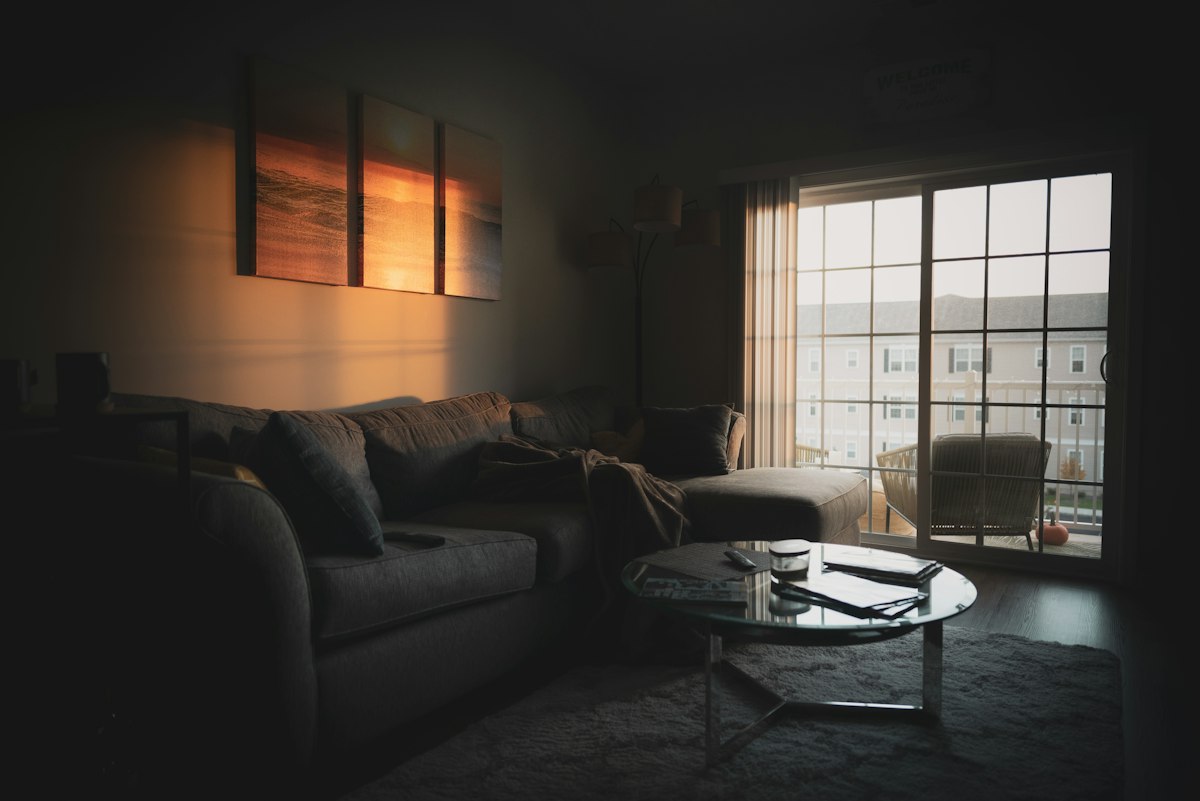
You measured the room three times, and the numbers still don't care: 11 feet by 13, one radiator exactly where a sofa wants to go, and a door that swings into the only sensible TV wall. Small living rooms aren't a design failure — they're the default setting for apartments, starter homes, and every "cozy" listing that ever made you laugh.
The good news is that small rooms fail for predictable reasons. The sofa is a few inches too deep. The coffee table blocks the walkway everyone actually uses. The rug floats like a postage stamp in the middle of the floor. Fix the proportions and the traffic flow, and the same square footage suddenly feels deliberate instead of cramped.
This guide walks through the layout math that works in real rooms — the ones with radiators, pets, laundry baskets, and a partner who refuses to give up the recliner.
The short version
If your living room is under roughly 150 square feet, start with three moves: choose a sofa no deeper than 36 inches, leave one clear walkway of at least 30 inches that nobody has to sidestep through, and size the rug so at least the front legs of every seat sit on it. Everything else — storage ottomans, nesting tables, a chair angled in the corner — is refinement. Get those three numbers right and almost any arrangement will feel calm instead of crowded.
What to look for
- Sofa depth under 36 inches. Depth, not length, is what eats a small room. Apartment-scale sofas (often called loveseats or condo sofas) run 32–36 inches deep and seat two honestly.
- Legs you can see under. Raised legs let light and sightlines pass beneath furniture, which makes the floor plane read as one continuous surface. Skirted, to-the-floor bases make pieces look heavier.
- A walkway of 30–36 inches. Map the route from door to door (or door to kitchen) and keep it sacred. Furniture that nudges into it gets bumped, and bumped furniture makes a room feel small.
- Dual-purpose pieces. A storage ottoman replaces a coffee table and hides blankets. Nesting tables give you surface area on movie night and floor space the rest of the week.
- A rug that anchors, not floats. In small rooms, a 5×8 or 6×9 rug with all front legs on it reads as a defined zone. Tiny 4×6 rugs usually make rooms look smaller.
- Vertical storage. Tall, narrow bookcases pull the eye up and store more per square foot of floor than low, wide consoles.
FRIHETEN Corner Sofa-Bed
A compact corner sofa that converts to a double bed with storage inside the chaise — the small-room multitasker for apartments that host guests but have no guest room.
- Converts to a bed in seconds
- Storage compartment under the chaise
- Chaise can be mounted left or right
- + Replaces a guest bed entirely
- + Firm, supportive seating
- – Firm sleep surface — some guests prefer a topper
- – Large boxes; measure the delivery path
KLIPPAN Loveseat
A genuinely compact two-seater at under 36 inches deep, for rooms where a full-size sofa would swallow the floor. Removable, washable covers keep it practical.
- Compact apartment-scale footprint
- Removable and washable covers
- Low profile suits low ceilings
- + Fits through narrow doors and halls
- + Covers are replaceable and inexpensive
- – Seat is firm and low
- – Two people, honestly — not three
VITTSJÖ Nesting Tables, Set of 2
Glass-and-steel nesting tables that expand your surface area for movie night and tuck into one footprint the rest of the week — small-room flexibility in its simplest form.
- Two tables nest into one footprint
- Tempered glass tops wipe clean
- Lightweight steel frames move easily
- + Visually light in tight rooms
- + Easy one-person assembly
- – Glass shows fingerprints
- – Not sturdy enough to sit on
The layout math that matters
Sofa to coffee table: 14–18 inches. Close enough to set down a mug without leaning, far enough that knees clear when you stand up. Less than 12 inches feels like a shin trap; more than 20 and the table becomes decoration.
Coffee table length: about two-thirds of the sofa. A 60-inch sofa pairs with a roughly 40-inch table. Longer tables crowd the ends; shorter ones look lost.
TV viewing distance: roughly 1.5 times the screen diagonal. A 55-inch TV wants about 7 feet of viewing distance. In a small room this often settles the sofa-versus-TV wall argument for you.
Leave 3–5 inches between the sofa back and the wall — or commit fully. The awkward gap is 1–2 inches: too small to clean, big enough to swallow remotes. Either float the sofa properly (a foot or more, with a console behind it) or push it nearly flush.
A layout that works in most small rectangles: sofa on the long wall, two compact chairs or one chair plus an ottoman opposite at a slight angle, rug binding them together, and the walkway running behind the chairs rather than through the conversation zone. If you need a sleeper for guests, a corner sofa-bed like the FRIHETEN in our picks earns its footprint by deleting the guest room problem entirely — see our guide to choosing a coffee table for sizing one around a sofa-bed.
Common small-room mistakes
- Pushing everything against the walls. It feels intuitive, but it creates a waiting-room ring with dead space in the middle. Pulling the sofa even a few inches forward and grounding it on a rug makes the arrangement feel intentional.
- Buying the rug last and too small. The rug is the cheapest way to define the zone. Buy it early, size it to the furniture, and let it slightly underlap everything.
- One overhead light and nothing else. Small rooms need light at sitting height. A floor lamp in the corner behind a chair does more for coziness than any ceiling fixture — we compare options in floor lamps vs. table lamps.
- Matching sets. A matched sofa-loveseat-chair set in a small room reads as one giant mass of upholstery. Mixed pieces with shared colors feel lighter.
FAQ
What is the best sofa size for a small living room?
For most small rooms, a sofa 72–84 inches long and no more than 36 inches deep is the sweet spot. Measure your doorways and stair turns before ordering — in older buildings, the delivery path, not the room, is often the real constraint.
Should a small living room rug go under the sofa?
At minimum, the front legs of the sofa and chairs should sit on the rug. This visually connects the pieces into one zone. In very small rooms, a rug that extends under all four legs works too, as long as it doesn't bunch against the walls.
How do I fit a TV in a small living room without it dominating?
Mount it on the wall at eye level from the seated position (center of screen roughly 42 inches from the floor), skip the bulky media console in favor of a low, shallow one, and keep the viewing distance near 1.5 times the screen diagonal so you can choose a slightly smaller screen than you think you need.
Is a sectional ever right for a small room?
Yes — a compact chaise sectional can actually seat more people in less floor area than a sofa plus chair, because it eliminates the gap between pieces. The catch is flexibility: measure twice, because a sectional commits you to one layout.