Candles vs. Reed Diffusers: Scenting a Home Safely and Well
One is an event, the other is background. An honest comparison of scent strength, cost per month, and the safety rules that should actually drive the decision.
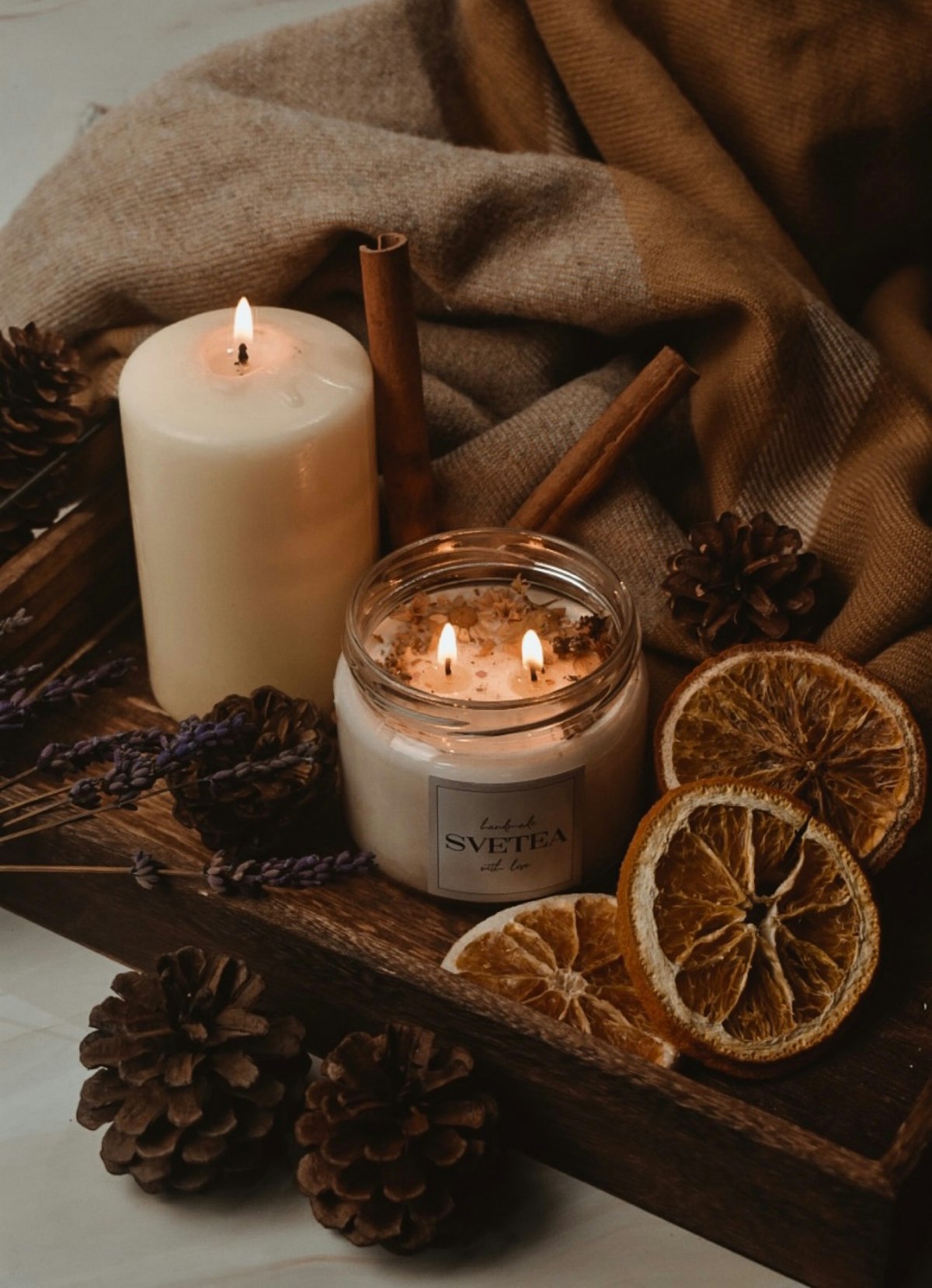
Home fragrance has a way of becoming invisible to the person who chose it. You light the expensive candle every evening and stop smelling it by week two, while guests walk in and immediately clock "the nice house smell." Meanwhile the reed diffuser in the hallway has been quietly doing its job for three months — or quietly doing nothing, because its reeds clogged in month one and nobody noticed.
Candles and reed diffusers are the two classic ways to scent a home, and they are not substitutes for each other. They differ in how scent is released, how strong it is, how much attention each demands, and — genuinely important here — how safe each is in a home with kids, pets, or a forgetful streak.
This guide compares them honestly, including the safety rules that matter, and ends with the hybrid setup most homes actually end up happiest with.
The short version
Candles give the strongest, most immediate scent and the atmosphere of a live flame, in exchange for constant supervision and regular replacement. Reed diffusers give a constant, low-level background scent for 6–12 weeks with zero flame and near-zero effort, in exchange for a subtler effect and no ambiance. The practical answer for most households: a diffuser for always-on background scent in halls and bathrooms, and candles as an event — lit deliberately, attended, and extinguished — in living spaces. If your home includes toddlers, curious cats, or anyone who forgets things on stoves, weight the decision heavily toward diffusers and flameless options.
What to look for
- Candle wax type: Soy and coconut-soy blends burn slower and cooler with less soot than pure paraffin, and are the common premium default. Beeswax burns longest with a faint natural honey note. Published burn times (a standard 7–8 oz candle typically rates 40–60 hours) matter more than scent names.
- Wick: A single centered cotton or wood wick, sized to the jar. A wick that mushrooms, smokes, or tunnels the wax is a quality signal — good candles melt to a full, even pool.
- Fragrance load and throw: "Throw" is how far scent travels. Small candles scent a bathroom; a living room needs a larger vessel or multiple points. Reviews and owner feedback consistently distinguish cold throw (sniffing the unlit candle) from hot throw (lit performance) — only the second counts.
- Diffuser size vs. room: A standard 100–120 ml reed diffuser scents a small-to-medium room. Large open-plan spaces need 200 ml+ or two diffusers placed apart.
- Reeds: Rattan reeds are the standard; fiber reeds wick faster and throw stronger but finish the oil sooner. More reeds = stronger scent and faster consumption — start with fewer than the bundle includes.
- Oil base and ingredients: Look for brands that publish fragrance ingredients and offer phthalate-free formulations if that matters to your household; treat "all natural" claims without ingredient lists as marketing.
- Refill economics: Diffusers with available oil refills cost far less per month over a year than repeatedly buying new vessels — and produce less glass waste.
Safety, stated plainly
This is the section that should actually drive the decision, so it gets no hedging:
- Never leave a burning candle unattended. Not "for a minute," not in the next room. Extinguish every candle when you leave the room or go to sleep. Fire services consistently attribute a large share of home candle fires to unattended burning.
- Keep 12 inches of clearance between a flame and anything that can burn — curtains, books, bedding, the dried flowers you forgot were there. Place candles on stable, heat-resistant surfaces, out of reach of children and pets, and away from drafts that bend flames toward objects.
- Trim the wick to about 1/4 inch before every lighting. Long wicks flame high, smoke, and soot the jar and the wall.
- Stop using a candle when 1/2 inch of wax remains — burning to the bottom can overheat and crack the container.
- Reed diffusers are flameless but not harmless. The oil is flammable before it wicks into reeds (keep bottles from heat sources), harmful if ingested, and a skin and eye irritant. Place diffusers where children and pets cannot knock them over — spilled diffuser oil damages wood finishes and painted surfaces, so use a coaster or tray underneath.
- Pets and scent: Birds and small animals have sensitive respiratory systems, and many pets dislike strong fragrance at their height — which is floor level, where diffusers sit. Keep scented products out of pet sleeping areas, ensure rooms are ventilated, and discontinue any product if a pet shows persistent sneezing, watery eyes, or avoidance of the room. When in doubt, ask your veterinarian — and be extra cautious with essential-oil-heavy products around cats, who metabolize many common compounds poorly.
Amber & Moss Soy Candle
A hand-poured soy candle in an amber glass jar with a woody, mossy scent profile — the deliberate-evening candle for living rooms and reading corners.
- 100% soy wax with cotton wick
- Around 40-50 hour published burn time for the standard size
- Reusable amber apothecary-style jar
- + Clean, even burn with proper first melt
- + Scent reads warm and natural rather than perfumed
- + Jar is genuinely reusable afterward
- – Single wick scents medium rooms at most
- – Like all candles, demands full supervision
Bamboo Reed Diffuser
A premium reed diffuser with a fresh green scent, sized for continuous background fragrance in entryways, bathrooms, and bedrooms for roughly three months.
- Around 175 ml fragrance oil volume
- Continuous scent rated for approximately 90 days
- Elegant glass vessel suits visible placement
- + Set-and-forget background scent, no flame
- + Consistent throw from quality rattan reeds
- + Refined scent blending per owner feedback
- – Premium price per fill
- – Refill availability varies by scent
Preserved Real Flower Reed Diffuser
A decorative reed diffuser with preserved flowers in the bottle, offering gentle background scent for small rooms at an accessible price.
- Preserved flower stems double as decor
- Adjustable scent via reed count
- Multiple fragrance options including unscented-look styles
- + Prettiest bottle in its price class
- + Gentle throw suits small bathrooms and desks
- + Low cost per room to try diffusing
- – Subtle scent will not carry a large room
- – Flower stems complicate reed flipping slightly
Getting the most from each
Candles: The first burn sets the candle's memory — let the melt pool reach the jar's edges (roughly an hour per inch of diameter) or every later burn will tunnel down the center, wasting half the wax. Keep lids on stored candles to protect the scent surface from dust. Group scent families by room rather than competing fragrances in adjacent spaces — the home reads as one coherent scent instead of a department-store aisle. For scent layering that matches the season, a wool-and-cedar candle beside the reading chair beats matching the diffuser to it; let the diffuser run a cleaner, lighter note in the background.
Reed diffusers: Flip the reeds weekly for a scent boost (over a sink, with a wipe for drips) and expect to replace reeds with every refill — old reeds are clogged with dust and saturated oil and cannot be revived. Keep diffusers out of direct sunlight and away from radiators; heat evaporates the oil in weeks instead of months and degrades the fragrance. A diffuser placed near — not under — an air current (hallway, near a doorway) distributes scent far better than one in a dead corner.
The fastest way to "reset" a nose-blind room is not a stronger product. Open the windows for twenty minutes, then reassess. Your baseline had drifted, not the diffuser.
FAQ
Which is cheaper over a year?
Diffusers, usually by a wide margin. A mid-range diffuser scents a room for 2–3 months per fill with refills available; an equivalent always-on candle habit burns through a candle every week or two. Candles win on cost only when used occasionally, as an event — which is also how they are safest.
Can I use both in the same room?
Yes, if the scents are related (same family — woody with woody, citrus with citrus) and staggered in strength: diffuser as the quiet baseline, candle lit only when you want the room to feel "on." Competing strong scents in one room is the most common home-fragrance mistake owners report.
Why did my diffuser stop smelling after a month?
Almost always clogged reeds or nose-blindness. Test by flipping the reeds — if scent returns briefly, replace the reeds. If a guest confirms the room smells fine, the diffuser is working and your nose has adapted; rotate scent families seasonally to keep your own perception fresh, the same trick as rotating the throws and textiles in our throw blankets comparison.
Are flameless alternatives worth considering?
Wax warmers deliver candle-like throw without an open flame and let you swap scents cheaply, but they still use heat and hot wax — safer than a flame, not risk-free around children. For bedrooms and nurseries, a diffuser remains the lowest-attention, lowest-risk option, with the ventilation caveat above.